Source Gold Coated Motorcycle Chain Sprocket for Cars, Motors, and Machinery
Find 30 gold coated motorcycle chain sprocket options for cars, motors, and machinery. Compare single and double row models with alloy steel or steel materials, featuring various surface treatments like zinc plating and black oxide to meet international standards; compare the available evidence and request quotations based on your requirements.
Key considerations
Products List


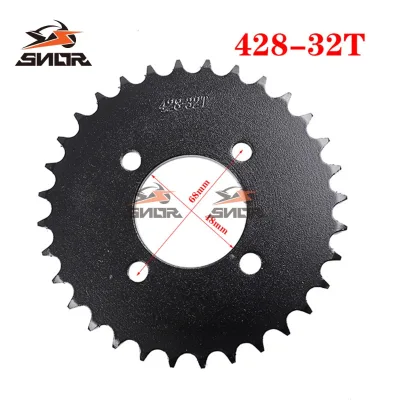


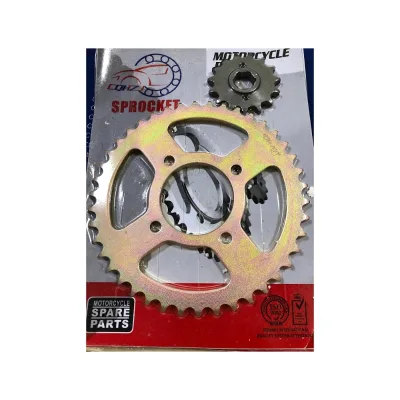


Comprehensive Sourcing Guide
Gold Coated Motorcycle Chain Sprocket Sourcing Guide
Gold coated motorcycle chain sprockets occupy a distinctive niche in the power transmission components market, combining functional durability with a premium visual finish that appeals to motorcycle aftermarket buyers and OEM assemblers alike. The gold coating—typically a surface treatment rather than a base material change—sits over alloy steel or steel substrates, and buyers should understand this distinction before comparing listings. Coated sprockets are marketed across single row and double row configurations, with applications spanning motorcycles, motors, agricultural machinery, and general machinery, so clarifying your intended duty cycle is the first sourcing step.
This guide is written for procurement teams and independent buyers evaluating Chinese-manufactured listings, which dominate this category. The observed listings carry customization availability, international standard or drawing-based production, and carton packaging as common attributes, but individual listings vary significantly in model coverage, tooth counts, and treatment details. Use this document to structure supplier conversations, verify technical claims against your own drawings, and build a qualification process that separates marketing finish from measurable engineering quality before committing to trial orders or long-term contracts.
Product Scope and Observed Listing Signals
The observed product set covers a broad model landscape: chain pitch series such as 520 and 428 for motorcycles, CG125 and CD100 reference models, AX115 variants, and industrial pitch families including 08B/10B/12B/16B/20B and larger 30B/36B-3 configurations. Tooth counts range from 8 to 125 teeth, with some listings specifying 9–20 teeth for particular gear profiles. Number of rows spans single, double, and triple configurations, and bore types include both taper bore and pilot bore options. This breadth means buyers can likely find a matched listing, but also that listings are not interchangeable without dimensional confirmation.
Observed commercial signals include customization availability across the set, origin in China (with at least one listing tied to Sichuan province), and packaging options ranging from carton packages to neutral packages, custom boxes, and standard export cases. Observed price points span from a fraction of a dollar to several thousand dollars, and minimum order quantities range from single units to 1,000 pieces, reflecting everything from sample-friendly aftermarket listings to bulk industrial supply. Treat these as listing-level observations rather than guarantees—each quotation must be confirmed line by line.
Technical Specifications to Verify
Dimensional verification is the core technical task. For listings that publish measurements, buyers have observed pitch values of 19.05 mm, internal widths of 11.68 mm, tooth widths of 11.1 mm, and radius widths of 2.0 mm, alongside reference diameters (De) of 31–64.3 mm, pitch diameters (Dp) of 27.85–60.89 mm, and hub-related dimensions (Dm) of 18–46 mm with bore references (D1) of 8–10 and mounting dimension (a) of 22–28 mm. Confirm every dimension against your own engineering drawing or a physical sample of the mating chain, because listing specifications describe individual products, not a category standard.
Beyond dimensions, verify material and treatment claims. Listings cite alloy steel and steel substrates, with surface treatments including gold coating, blackening, zinc plating, and hardening of teeth with black oxide. Hardened tooth surfaces are claimed in several listings, and manufacturing methods include both cut gear and cast gear processes—a distinction that materially affects strength and cost. Toothed portion shapes are listed as spur gear and curved gear profiles, and profile options of A/B type appear. Ask each supplier to state which combination applies to your specific part number, in writing, with the drawing revision referenced.
Compliance and Safety Documentation
Because motorcycle sprockets are safety-relevant drivetrain components, documentation discipline matters more than the finish color. Buyers should request material composition declarations, heat treatment records for hardened tooth claims, and dimensional inspection reports tied to the shipped batch. Listings state production to international standard or per customer drawing, and some reference specific standard designators such as 36B-3 and 12B-1-2-3 configurations—verify that the supplier can map your required chain series to the correct standard revision rather than relying on model-number shorthand.
Do not assume certification status from listing keywords. Instead, ask what documentation the factory can actually produce: first-article inspection reports, batch hardness test records, and coating adhesion or thickness data for the gold finish. If your market requires specific conformity marks or testing, state those requirements in the request for quotation and confirm feasibility before ordering. For the coating itself, request clarification on whether the gold layer is a plating, a PVD-type deposition, or another process, since this affects both durability documentation and any export or import paperwork your market may require.
Cost Drivers and Commercial Terms
Price variation in the observed set is extreme—from under one dollar to several thousand dollars—because the category spans small motorcycle sprockets and large industrial multi-row units. Key cost drivers include material grade (alloy steel versus plain steel), manufacturing method (cut gearing costs more than cast), the number of rows, tooth count and diameter, bore type (taper bores add machining), and the surface treatment stack, where a gold coating adds a finishing step over base hardening. Customization availability means non-standard drawings will typically carry tooling or setup considerations not visible in catalog pricing.
Commercial terms should be negotiated explicitly because observed MOQs range from 1 to 1,000 pieces. For a first engagement, use the low end of that flexibility to secure samples, then quote production volumes separately. Confirm packaging in the contract—carton package, neutral package, custom box, or standard export case—since export-grade packaging affects both cost and transit damage risk. Clarify the payment structure, Incoterms, and who bears responsibility for inspection before shipment. Where the supplier supports drawings, agree on who owns the drawing file and whether tooling charges apply to repeat orders.
Supplier Qualification and Quality Control
Qualify suppliers through a staged process rather than listing claims. Start with a technical questionnaire covering material source, heat treatment capability, gear cutting or casting equipment, and finishing line details for the gold coating. Then request samples of your exact specification—model, tooth count, row count, and bore type—and inspect them against your drawing: pitch accuracy, tooth profile, bore concentricity, runout, and coating uniformity. For listings citing Sichuan origin or other Chinese manufacturing bases, factor in whether the factory itself produces or trades, and ask directly.
Embed quality control into the order, not just the sample stage. Specify agreed inspection points—incoming material, post-heat-treatment hardness, post-machining dimensions, and final coating appearance— and request batch-level records with each shipment. Define an acceptable quality limit for visual coating defects, since gold finishes show scratches and thin spots readily. For recurring orders, consider periodic third-party or in-person audits, and retain golden samples from the approved first article as the arbitration reference. Any deviation from the approved sample should trigger a documented review before the batch ships.
Long-Term Procurement Checks
Long-term value depends on consistency, so track supplier performance across batches rather than judging a single delivery. Maintain a simple scorecard covering on-time delivery, dimensional conformity, coating defect rates, packaging condition on arrival, and responsiveness to claims. Re-verify critical dimensions on each new production lot against the original approved sample, particularly when the supplier signals changes in material lot, equipment, or process. If volume grows, revisit whether the cast-versus-cut manufacturing method still matches your duty requirements, or whether upgrading the substrate or treatment pays back in warranty reductions.
Protect continuity with documentation and dual sourcing. Keep the controlling drawing, standard references, coating specification, and packaging requirements in a controlled file that any qualified factory can quote from, reducing dependency on one supplier's internal records. Monitor whether the supplier maintains the same customization capability and packing options over time, since observed listings show these as variable attributes. Finally, review pricing annually against material and finishing cost movements, and confirm that the gold coating process has not been quietly substituted with a cheaper finish—spot-check delivered goods against retained samples each contract cycle.
FAQs
What materials are used for gold coated motorcycle chain sprockets?
These sprockets are typically made from alloy steel or steel, chosen for strength and wear resistance. The gold coating is applied as a surface treatment over the base material. Alloy steel versions suit higher-load motorcycle applications, while standard steel options cover general replacement needs. Material choice should match your chain model, tooth count, and expected operating conditions.
Which chain models can these gold coated sprockets match?
Listed models include 520, 428, AX115, CD100, CG125, and 30B, plus 08B/10B/12B/16B/20B series sprockets. The 428 and 520 sizes are common motorcycle chain pitches, and model references like CD100 and CG125 indicate fitment for those bike platforms. Always confirm the chain pitch, tooth count, and bore dimensions against your existing sprocket before ordering.
Can I order custom gold coated motorcycle chain sprockets with my own drawing?
Yes, customization is available, and production can follow international standard or your drawing. You can specify tooth counts, bore type such as taper bore or pilot bore, number of rows, and surface treatment. Provide accurate technical drawings with dimensions, material requirements, and packaging preferences so the factory can quote and produce to your specification.
How are these sprockets surface treated besides gold coating?
Besides gold coating, listed surface treatments include blacken, zinc plating, and hardening teeth with black oxide. Hardened tooth surfaces improve wear life on the working faces, while black oxide and zinc plating add corrosion resistance for storage and use. Gold coating is mainly an appearance finish, so combine it with tooth hardening if durability is a priority.
What tooth count range is available for these sprockets?
Available tooth counts range from 8 to 125 teeth, covering small drive sprockets through large driven sprockets. Single row and double row configurations are offered, and some models support single, double, or triple arrangements. Choose a tooth count compatible with your chain pitch and desired gearing, and verify the outer diameter fits your swingarm clearance.
What bore types do gold coated motorcycle chain sprockets use?
Taper bore and pilot bore options are available. Pilot bore sprockets arrive undrilled or with a standard pilot for machining to your shaft size, while taper bore sprockets use taper bushings for secure, concentric mounting and easier replacement. Confirm your shaft diameter and mounting method before ordering so the bore type and dimensions match your assembly.
How are gold coated motorcycle chain sprockets packed for shipping?
Packing options include carton package, neutral package or custom box, and standard export case for larger shipments. Neutral packaging allows you to apply your own brand, while custom boxes support private-label programs. For export orders, standard export cases protect sprockets during container shipping. Confirm packing preference and any labeling requirements with the supplier at quotation stage.
Which applications suit gold coated motorcycle chain sprockets?
Listed applications include motorcycles, motors, agricultural machinery, cars, marine equipment, electric cars, toys, and general machinery. Gold coating gives a distinctive appearance that suits visible motorcycle drivetrains and aftermarket styling. For industrial or agricultural use, focus on tooth profile, hardness, and chain compatibility rather than finish, since working conditions matter more than appearance.